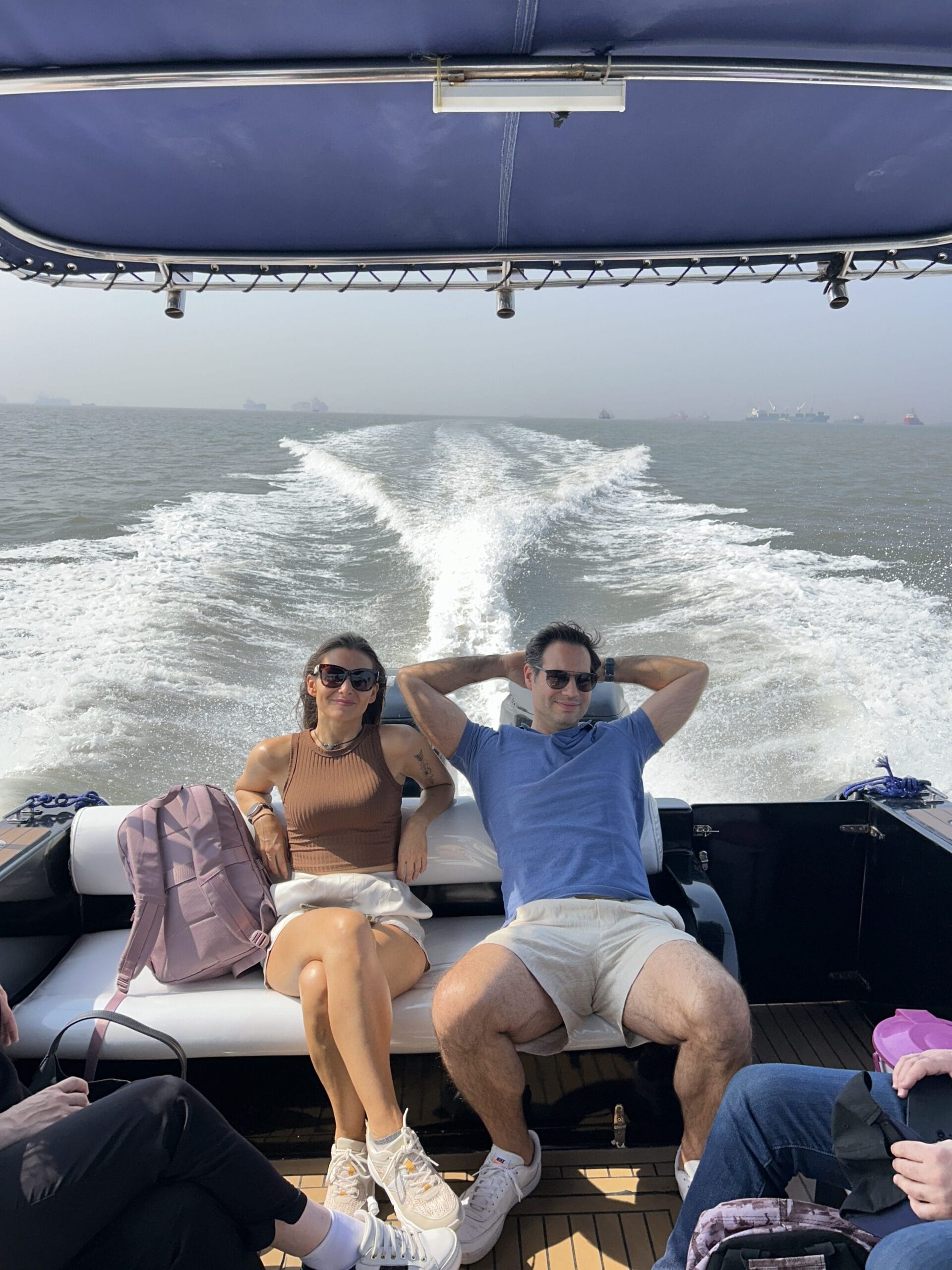
There is a particular kind of morning in Mumbai that makes the city feel cinematic.
The sun rises over the Arabian Sea. The Gateway of India stands quietly against the harbour. The Taj Mahal Palace watches the waterfront as it has for more than a century. Ferries begin to gather. Travellers check their cameras. Guides scan their guest lists. And somewhere between the gulls, the sea breeze, and the calls from the pier, one question comes up again and again:
How much does a speedboat to Elephanta Caves cost?
For international travellers visiting Mumbai, the Elephanta Caves are often one of the city’s most fascinating half-day experiences. The caves are not just another sightseeing stop. They are a UNESCO World Heritage Site located on Elephanta Island (also known as Gharapuri), around 10–11 km from Mumbai’s historic waterfront. UNESCO describes the site as a collection of rock art linked to the cult of Shiva, where Indian art found “one of its most perfect expressions” in the main cave’s high reliefs.
But the journey to Elephanta matters almost as much as the destination.
You can take the public ferry. Or you can travel by speedboat.
One is economical and traditional. The other is faster, more private, more comfortable, and far better suited to travellers who are short on time, arriving by cruise ship, staying at luxury hotels, travelling with family, or simply looking for a smoother Mumbai experience.
So, let’s break down the cost properly.
First, What Is the Usual Cost of a Speedboat to Elephanta Caves?
The cost of speedboat services to Elephanta Caves from Mumbai is not a fixed universal fare like a metro ticket or museum pass. It depends on several factors: whether you choose a private boat or shared speedboat tour, the size of the boat, the number of guests, the date, weather conditions, guide requirements, entrance tickets, transfers, and special handling.
In most cases, speedboat pricing is quoted in one of two ways:
Private speedboat charter: priced per boat, ideal for couples, families, VIP travellers, cruise guests, and small private groups.
Shared or group speedboat tour: priced per person, usually more economical for solo travellers or couples who are happy to join a small group.
A private speedboat will naturally cost more than a public ferry, but that difference is not only for the boat. It is for time saved, comfort, flexibility, assisted boarding, privacy, coordination, and a more controlled experience.
For travellers who have only one day in Mumbai, especially cruise passengers, this difference can be significant.
A regular ferry journey can take around 60–75 minutes each way, depending on conditions, boarding time, and crowd flow, while a speedboat can usually reduce the crossing to around 20–25 minutes in suitable sea conditions. Shore Excursion India’s own speedboat page positions the speedboat as a faster premium option, with an average speedboat transfer of around 20 minutes compared with a longer public ferry journey.
That means the speedboat is not just a transport upgrade. It changes the rhythm of the entire visit.
Why Does the Speedboat Price Vary?
Many travellers expect one simple answer: “What is the price?”
But the smarter answer is: What kind of experience are you booking?
A basic boat transfer is very different from a fully managed Elephanta Caves experience. The cost may vary based on:
1. Private vs Shared Speedboat
A private speedboat is booked only for your group. It gives you more control over departure time, return time, pacing, and privacy.
A shared speedboat tour is more economical because the cost is divided between multiple guests. This works well for solo travellers, couples, and international visitors who want the speedboat advantage without chartering the entire vessel.
2. Boat Size and Capacity
A smaller speedboat for a couple or family will be priced differently from a larger 10–12 seater boat. Larger boats may be recommended for comfort, safety, sea conditions, or group size.
For luxury travellers, a slightly larger boat can be worth the upgrade because it allows better seating, easier movement, and a more comfortable ride.
3. Weather and Sea Conditions
This is one of the most important points for Elephanta.
Speedboat operations depend on safe sea conditions, port permissions, and weather. During rough seas, high wind, heavy rain, or official warnings, boat services may be delayed, rescheduled, upgraded to a more suitable vessel, or cancelled for safety.
This is especially relevant during the monsoon season. Shore Excursion India notes that boat timings depend on sea conditions and port clearances, with monsoon-related suspension between June and September.
For international travellers, this matters because a responsible operator should never treat the sea casually. A safe cancellation is always better than a risky departure.
4. Inclusions in the Tour
Some quotes may only include the boat. Others may include:
Hotel pick-up and drop
Gateway of India boarding assistance
Private speedboat transfer
Licensed guide
Elephanta Caves entrance tickets
Toy train or local island transfers, where applicable
Bottled water
Port or cruise terminal coordination
Return transfer to hotel, cruise terminal, or city tour point
A lower quote may look attractive at first but may not include these essentials. Always check what is included before comparing prices.
5. Cruise Passenger Handling
Cruise guests have a different requirement. They cannot afford delays. Their return must be synchronized with the ship’s schedule.
For cruise passengers, the speedboat cost may include additional coordination, port-side assistance, timing buffer, vehicle movement, and priority handling. This is not just convenience. It is risk management.
What Is Usually Included in a Premium Elephanta Speedboat Tour?
A well-managed Elephanta Caves speedboat service is not just “boat from Mumbai to island.”
It usually begins before you even step on board.
A representative assists you near the Gateway of India or agreed boarding point. Your guide or coordinator ensures the boat is ready. You avoid the uncertainty of public ferry queues. Once the boat leaves the harbour, the city begins to open behind you: the Gateway, the Taj Mahal Palace, naval zones, cargo ships, seagulls, and the wide blue-grey sweep of Mumbai Harbour.
Within around 20–25 minutes in good conditions, Elephanta Island comes into view. You disembark, continue toward the caves, and begin the climb or island approach toward one of India’s most powerful rock-cut monuments.
Inside the main cave, the atmosphere changes. Mumbai’s noise disappears. The stone cools. Pillars rise out of shadow. Then the famous Maheshmurti, the three-headed form of Shiva, appears from the rock.
The Archaeological Survey of India describes Cave 1 as the most impressive excavation, famous for its sculptures including Mahesamurti, Ardhanarishvara, Nataraja, Gangadhara, Ravana shaking Kailasa, and other important panels.
This is where a good guide changes the experience. Without interpretation, visitors may see impressive carvings. With the right storyteller, they understand mythology, symbolism, damage, preservation, and why the caves still matter after more than a thousand years.
Are Elephanta Caves Entry Fees Included in the Speedboat Cost?
Not always.
This is one of the most common points of confusion.
The speedboat cost and the Elephanta Caves entry fee are usually separate unless the tour operator clearly mentions that entry tickets are included.
As per the Archaeological Survey of India, Elephanta Caves are open from 9 AM to 5 PM and closed on Mondays. Entry is free for children below 15. For other foreign visitors, the entry fee is listed as ₹600 cash or ₹550 online payment.
For Indian citizens and visitors from SAARC/BIMSTEC countries, the listed fee is lower. But for most international travellers from the US, UK, Europe, Australia, Canada, and other regions, the foreign visitor fee applies.
Before booking, ask:
“Does my quoted price include Elephanta Caves entrance tickets?”
This simple question avoids confusion on the day of travel.
Is the Speedboat More Expensive Than the Ferry?
Yes. A speedboat is more expensive than the public ferry.
But that is not the full comparison.
The ferry is a budget transport option. It works well for backpackers, flexible travellers, and those who do not mind crowds, fixed schedules, slower boarding, and a longer crossing.
The speedboat is for travellers who value time, privacy, comfort, and a more seamless experience.
For example, if you are staying in Mumbai for only one day, the public ferry can consume a large part of your morning. Between reaching the pier, buying tickets, waiting for departure, the longer crossing, disembarking, visiting the caves, waiting again, and returning, the experience can become tiring.
A speedboat compresses the travel time and gives the day more breathing room.
This is why the speedboat makes the most sense for:
Cruise passengers with limited shore time
Families with children
Senior travellers with limited energy
Luxury travellers staying in South Mumbai
Corporate guests or incentive groups
VIP travellers who prefer privacy
Photographers and culture-focused travellers
Anyone combining Elephanta with a Mumbai city tour
The ferry gets you there. The speedboat gives you the day back.
Is a Private Speedboat Worth It for Elephanta Caves?
For many international travellers, yes.
The private speedboat becomes especially valuable when the trip is not just about reaching the island but about controlling the experience.
Imagine this: your cruise ship docks in Mumbai in the morning. You have a limited window before all-aboard time. You want to see Elephanta Caves, but you also want to return safely, perhaps enjoy a short city tour, maybe stop at the Gateway of India, the Taj Mahal Palace, Marine Drive, or Kala Ghoda.
In this case, the cheapest option is not always the smartest option.
A private speedboat helps reduce uncertainty. Your schedule is clearer. Boarding is managed. The boat is arranged for your group. The return is planned. Your guide understands the pace. Your operator has a responsibility to bring the experience together.
For guests spending thousands of dollars on flights, cruises, hotels, and India travel, the speedboat cost is often a small part of the overall journey, but it can dramatically improve the quality of the day.
What Is the Best Time to Take a Speedboat to Elephanta Caves?
The best time is usually in the morning.
A morning departure helps you avoid stronger afternoon heat and gives you a better chance of exploring the caves before the island becomes too crowded. For photography, comfort, and pacing, earlier is usually better.
Seasonally, the best months are generally from October to March, when Mumbai’s weather is more pleasant and the sea is usually calmer. The warmer months of April and May are possible, but heat can be uncomfortable on the island. The monsoon months require special caution because boat operations may be affected by sea conditions and safety advisories.
For international visitors, especially those not used to Mumbai’s humidity, morning is the most comfortable choice.
How Long Does the Complete Elephanta Speedboat Experience Take?
A well-paced Elephanta Caves visit by speedboat usually takes around 3 to 4 hours, depending on your starting point, walking pace, guide time, crowd levels, and return arrangements.
A typical flow may look like this:
Depart from Gateway of India area
Speedboat crossing to Elephanta Island
Arrival and island approach
Guided visit of the main cave complex
Optional time for photography or refreshments
Return speedboat to Mumbai
Continue to hotel, cruise terminal, or city tour
If you are combining Elephanta with a Mumbai city tour, plan a longer half-day or full-day itinerary.
For cruise passengers, the timing should always be planned backward from the ship’s final boarding time.
What Should International Travellers Know Before Booking?
Comfortable footwear is essential
Elephanta involves walking and steps. The caves are not a simple drive-in monument. Wear shoes or sandals with grip.
Carry sun protection
A hat, sunglasses, and sunscreen are useful, especially between February and May.
Keep some cash
Even if your tour is prepaid, small local expenses may require cash.
Do not compare only by price
Compare the boat, inclusions, guide quality, safety standards, cancellation terms, and weather policy.
Ask about weather cancellation
A professional operator should clearly explain what happens if sea conditions are unsafe.
Confirm Monday closureThe
Elephanta Caves are closed on Mondays as per ASI timings. Do not plan the tour on a Monday unless you have verified special operational changes from an official source.
Cost Breakdown: What You Are Really Paying For
When you book a speedboat to Elephanta Caves, the cost may include far more than the vessel itself.
You may be paying for:
The boat charter or seat
Fuel and marine operations
Licensed boat crew
Safety equipment
Boarding coordination
Time flexibility
Professional guide
Tour planning
Entry ticket handling
Guest assistance
Weather monitoring
Cruise timing coordination
Local support in case of delays
This is why two operators may quote very different prices for what appears to be the same tour.
One may simply be offering a boat.
Another may be offering a managed shore excursion.
For international travellers, especially first-time visitors to India, the second option is usually more reassuring.
Ferry vs Speedboat: Which Should You Choose?
Choose the ferry if your priority is the lowest possible cost and you have enough time.
Choose the speedboat if your priority is comfort, speed, privacy, and efficient travel.
The ferry is part of old Mumbai’s charm. The speedboat is part of modern Mumbai’s convenience.
If you are a backpacker, student traveller, or budget explorer, the ferry may be perfectly fine.
If you are a cruise guest, luxury traveller, senior visitor, family, corporate guest, or someone who wants a smoother experience, the speedboat is the better choice.
Final Answer: How Much Should You Budget?
The cost of speedboat services to Elephanta Caves depends on the type of experience you choose.
A shared speedboat tour will usually be more affordable per person.
A private speedboat charter will cost more but offers exclusivity, flexible timing, and better comfort.
A fully guided premium tour may include boat transfers, guide, entry tickets, boarding assistance, and hotel or cruise coordination.
Foreign visitor cave entry is usually separate unless clearly included, with ASI listing the foreign visitor ticket at ₹600 cash or ₹550 online.
So rather than asking only, “What is the cheapest speedboat to Elephanta?” a better question is:
“What is included in the cost, and how much time, comfort, and certainty does it give me?”
Because Elephanta is not just a place you visit. It is a journey across Mumbai Harbour into a world of ancient stone, mythology, silence, and scale.
And when you arrive by speedboat, the experience begins before you reach the island.
It begins the moment Mumbai slips behind you and the sea opens ahead.
FAQs: Cost of Speedboat Services to Elephanta Caves
How much does a private speedboat to Elephanta Caves cost?
The cost depends on boat size, number of guests, date, timing, inclusions, and whether you require guide services, hotel transfers, or cruise port coordination. Private charters are usually quoted per boat rather than per person.
Is the Elephanta Caves speedboat cost per person or per boat?
It depends on the booking type. Shared speedboat tours are usually priced per person. Private speedboats are usually priced per boat or charter.
Is Elephanta Caves entry included in the speedboat cost?
Not always. The Elephanta Caves entry ticket is separate unless your operator clearly includes it in the package. ASI lists the foreign visitor entry fee at ₹600 cash or ₹550 online.
How long does the speedboat take from Mumbai to Elephanta Caves?
In suitable sea conditions, the speedboat transfer usually takes around 20–25 minutes each way, making it much faster than the regular ferry.
Where does the speedboat to Elephanta Caves depart from?
Most speedboat services depart from the Gateway of India area or a nearby authorised boarding point in South Mumbai.
Is the speedboat safe?
A professional operator should use licensed boats, trained crew, life jackets, and follow weather and port safety instructions. Boat operations should never proceed in unsafe sea conditions.
Are speedboats available during monsoon?
Speedboat operations are often restricted or suspended during the monsoon period due to rough sea conditions. Always check availability before planning a June–September visit.
Is a speedboat better for cruise passengers?
Yes. Cruise passengers usually have limited shore time, so a speedboat helps save travel time and allows better control over the return schedule.
Can Elephanta Caves be combined with a Mumbai city tour?
Yes. Many travellers visit Elephanta Caves in the morning and continue with Gateway of India, Taj Mahal Palace, Marine Drive, CSMT, Kala Ghoda, Dhobi Ghat, or other Mumbai highlights later in the day.
Are Elephanta Caves open every day?
No. As per the Archaeological Survey of India, Elephanta Caves are closed on Mondays and open from 9 AM to 5 PM on other days.
Explore our Elephanta Caves Shore Excursion:
https://shoreexcursiontoursindia.com/elephanta-caves-by-speedboat/